STORY 08
At Ease in the World
 虎头锤 (Hutouchui) · Staff Engineer
Translated from the original Chinese essay · Read the Chinese original →
This is the eighth piece in Wandering Under Different Stars (8/100).
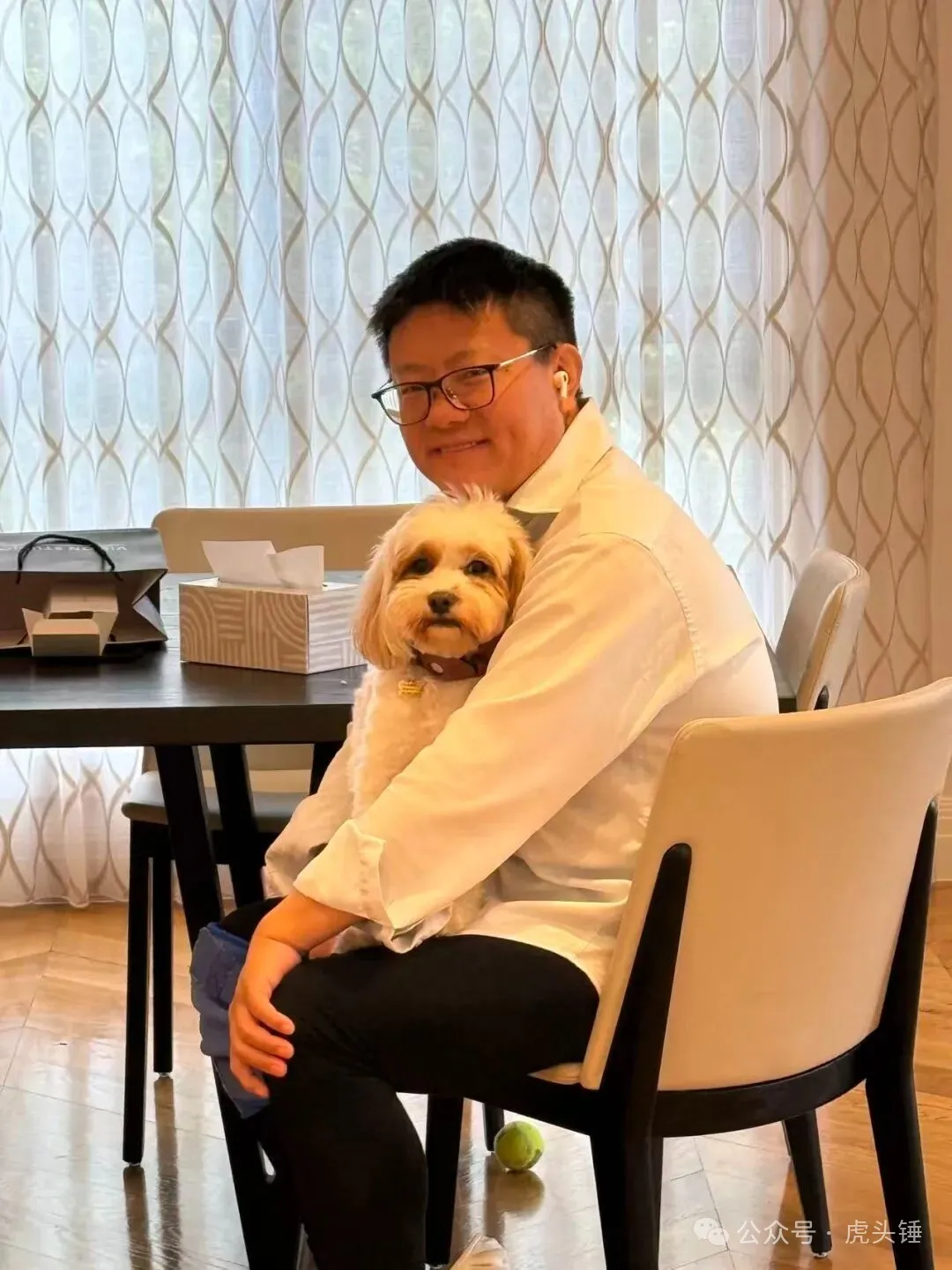
Every time we see Lao Jia, he greets us with a smile, warm and kind.
If you met him for the first time, you would never guess that he is the person we call "the ceiling of contract workers."
Learning and Practicing
On an early morning train, the carriage sways gently, and light falls through the windows layer by layer. Most people keep their heads down, scrolling on their phones, earbuds in, not looking up. Some read the news, some binge-watch shows, some play games.
Lao Jia reaches into his bag and pulls out a stack of paper held together with a black binder clip. The pages are worn soft at the edges, corners curled, rough to the touch.
It is the Analects.
He smiles and says, "Back in China, I never actually read it. At the time, it felt far removed from my life." But as a native of Shandong, the influence of the land of Confucius and Mencius was already in his bones.
He only truly began reading the Analects after arriving in Australia.
"After coming to Australia, I felt a lot of cultural clashes, and many times I couldn't connect. I realized that reading this kind of Chinese classics, reading the Analects, can cross borders. It talks about human nature, and it helped me stop agonizing over so many things."
It is not so convenient to buy Chinese books in Australia, so he printed out the entire text of the Analects himself, divided it into several bundles, and carried them with him. He reads on the train, after lunch, and again for a while after getting home in the evening.
"I don't have any particular goal. It's not for an exam, not to show off. It's just that when I run into problems, when my thoughts are tangled and I can't let go, I take it out and read."
During his first job interview after arriving in Australia, English tied his tongue in knots. The boss asked him to explain his approach, and he struggled through it haltingly, then tried to draw it on the whiteboard. Just as he stepped up to the board, he got a call from his wife.
His wife had brought their son and was waiting outside for the interview to end, but their one-year-old son suddenly burst into heart-wrenching tears. Afraid of disturbing others, she had no choice but to call him.
He thought to himself, this is it, the interview is probably doomed. To his surprise, the interviewer looked up and smiled, saying, "I have three sons. I understand. Don't worry, take your time."
Lao Jia often tells this story with a laugh: "I really have to thank my son. That time, my son definitely helped me pass the interview."
In the first few years, like many immigrants, English continued to be a constant headache. A simple question from a supermarket cashier, small talk from a taxi driver, acronyms colleagues tossed around loudly in meetings—everywhere there was awkwardness. Besides his own efforts, the company also arranged paid one-on-one English training. Combined with his solid technical skills, he managed to hold on in a company where all his colleagues were white.
And the Analects became his greatest support during that period, line by line, page by page, seeping in little by little. "During those years of reading the Analects, I felt I became much more tolerant, less picky about people, and my heart opened up," he says with a smile. "It really isn't something stale. On the contrary, it makes you feel at ease."
Sometimes he is not even really reading; just holding the corner of a page between his fingers steadies his mind. As he often says, "Integration is a false proposition. Just be yourself, respect others, and that's enough."
The Wise Are Free from Doubt
In 2010, he joined Australia Post. By then, he was no longer the person who could not understand anything when he first arrived in Australia. His English had smoothed out, and his heart had settled.
"There were quite a few Chinese colleagues back then," he says. "On Fridays we would all have lunch together. Whose kid was sick, who was moving, who was looking for the next project—we would talk about all of it. That atmosphere was really nice, like a small community."
He stayed at Australia Post for six years and ten months, working as a contractor. Fellow contractors said it was rare to stay that long in a contract role. He laughs: "I guess I still have that Shandong loyalty."
Actually, before coming here, he had already heard from friends about the contractor market. "Back then I heard that contractors earned much more, and the gap was quite big," he says. "And you get to work on more projects, learn more things."
He felt that path might suit him better. "I just wanted to try it out, to see if I could get exposure to more varied projects and learn something."
During those years at AU Post, he built a very solid foundation. Then in 2017, he left and went to NAB. "After staying in one place for a long time, there's only so much you can learn. It's good to change environments."
He has a natural talent for certifications. Before coming to Australia, because he happened to have a few months of free time, he took every Java certification available on the market.
At NAB, when the pandemic hit, he began systematically pursuing AWS certifications.
"I scored 93 on my first exam. People said I was a genius, but I said no—I just got up an hour earlier and went to bed an hour later, and did a couple more practice tests. After that, I couldn't stop, and I ended up with more than thirty." (I think he really is a genius. My first AWS certification nearly killed me.)
He was the first person I knew to pass 11 AWS certifications, and he earned the symbolic golden jacket.
During those years, he also moved between different companies. "I jumped out of NAB once and got a rate increase, then jumped back and got another. After a few jumps, the rate kept creeping up. Later I also went to Seek and ANZ."
Through this process, he became what we all consider "the ceiling of contract workers."
The daily life of a contractor is all about finding ways to renew contracts. Once, his contract approval was extremely slow. It dragged on for three full months, and he "ran naked" for four weeks. No contract in hand, but the salary kept coming. He went to work every day as usual: checking logs in the morning, aligning with testing in the afternoon, migrating deployment scripts from environment A to environment B in the evening, as if nothing had happened.
A friend joked, "Running naked again?" He shrugged: "Just keep working. Write code when there's code to write."
Later, he went to Services Australia. This time was special: no interview. Through a recruiter's maneuvering, he got the offer directly—especially notable because it came at a time when the overall environment was not great and many companies were laying people off. To this day, he cannot explain exactly why. He can only guess that his previous reputation played a role. "Maybe someone remembered me," he says.
Others see it as luck, but he prefers to view it as accumulation: getting things done across different projects, being remembered, and naturally being thought of next time.
The Analects says: The wise are free from doubt, the benevolent from worry, the courageous from fear.
That is also the shape of his own days.
Phoenix Takes Flight
During the 2008 financial crisis, Lao Jia's wife had been working in mechanical design for less than two years when she was laid off. "Because she was the newest, she got cut," Lao Jia says.
At that time, they had just had their second son and still had a mortgage. She did not rush to find another engineering job. Instead, she wanted to try a different path. "My wife actually has quite a good business sense," Lao Jia says with a smile.
And so, almost by accident, she started running a milk bar. The business did better than they expected. Later, the milk bar turned into an IGA supermarket serving Western customers.
"She had to negotiate contracts, order stock, do the accounts, and manage people—white people, students, full-time staff," Lao Jia says. "She thinks fast. She knows when to order and when to return, and she never hesitates when bargaining with suppliers."
Their conversations also changed during those years. "She would come home and tell me who she negotiated with today, for how long, and how she closed the deal. I would tell her about project launches and bugs I ran into."
He feels that the layoff actually did her a favor. "I told her, getting laid off back then was a good thing. Your real talent is in business. Sometimes people are like that—when pushed to that point, their potential comes out."
When COVID-19 arrived, the IGA supermarket, as an essential service, got even busier. After all, during lockdown, people could only shop at supermarkets. At that time, the two kids were doing online classes at home every day. People were stuck at home, and their minds began to drift. "After a long time, you don't know what you want to do anymore. All kinds of confusion and disorientation," Lao Jia says. "I felt the kids needed more attention then, so she fully returned to the family."
They sold the business. She began getting up early every day to make breakfast, drive the kids to and from school, and sit with them while they did practice problems. "During those years, she was the kids' strongest support," Lao Jia says. "Without her, the kids might have gone off track."
The older son joined the robotics club in high school and won third place nationally in a competition. In university, he continued with robotics, often working late into the night. Lao Jia asked him, "Your younger brother tutors for seventy dollars an hour. Why don't you do that?" He replied, "I'm spending my time on things that will help me more in the future."
The younger son finished his VCE last year and is now studying medicine at the University of Melbourne. (For those unfamiliar, getting into medicine at Melbourne is at the level of being a top scorer in Victoria's high school exams.) Recently he went to Berkeley on exchange: classes during the day, hospital at night. Very busy, but he feels grounded: "Medicine is a long road."
"Now that we have more time, she has started doing business again," Lao Jia says with a smile. "This person just can't sit still."
No matter the period, the family's energy has always been upward. "Our whole family is quite optimistic," Lao Jia says. "It's not that we haven't faced difficulties; we just never felt they were difficulties."
Joy on the Road
At the end of the interview, I asked Lao Jia, "After all these years, is there anything particularly memorable?"
He thought for a moment and said, "The Easter holidays. For several years, we always went out with a few families of friends. Those were truly unforgettable."
That was their most fixed annual ritual. Several families, a car full of kids, snacks and pillows stuffed into the trunk. The moment the doors closed, the fun began.
Someone would put on music and everyone would sing along. Someone would say they were hungry, so they would stop in a small town and order fish and chips. At the campsite, the men built the fire and the women laid out the food. At night the campfire glowed, and the wind blew through the valley. A few wooden chairs gathered in a circle, and the conversation had no fixed topic: whose contract got renewed, whose boss changed again, whose kid became obsessed with astronomy.
"The most memorable part wasn't the destination; it was the laughter on the road," he says.
Besides Easter, the family often went out together. Sometimes to the beach, sometimes to the mountains. Some years they drove across states, four or five days at a time. "When the kids were little, we had to bring a ton of stuff wherever we went. Now that they're older, they pack their own bags and we can just go."
Later, the distances grew. They went to Japan, to Europe, and took the kids back to China. "During those years the kids grew fast. They had their own ideas and could help plan the routes. You could see they had really grown up."
Recently, he started playing badminton. "Before, with both kids at home, I always wanted to spend time with them. Now one is into robotics and the other is studying medicine, so the house is much quieter." He says he needs to find something to do.
I often run into him at the sports center. When Lao Jia plays, he still wears that same smile, calm and unhurried. The racket swings out and back, clean and crisp.
Once, on the way back, the kids all fell asleep. Only the hum of the engine remained in the car.
Lao Jia looked out at the streetlights along the highway and suddenly remembered the early days in Australia, pushing a stroller down the streets of Oakleigh; the first interview, the diagram on the whiteboard and the child crying outside the hallway; the cafeteria at Australia Post, with a few tables pushed together.
Twenty years have passed, and he feels that his drifting road has slowly gained sound and warmth. "This is our life now," he says. "It's good."
The Gentleman Is Open and at Ease
Lao Jia's father passed away at the age of ninety. People in the village said that when his father was alive, he was a living Yan Hui. Generous, never contentious. Whoever knocked on the door could sit down; whoever was in trouble, he would lend a hand.
"I can't reach that level, but I know I should walk in that direction," Lao Jia says. He mentions that even relatives on his wife's side deeply respected his father. "They all felt my dad was especially cultivated. He didn't talk much, but when he spoke, people believed him."
That calm, generous presence has also stayed with him.
He keeps the Analects on the second shelf of his bookcase, within easy reach. When he has time, he flips open a page and makes a couple of marks in the margin. The handwriting is casual, but it settles his mind.
During the pandemic years, he stayed home and watched his wife sell the business and devote herself fully to the children. Money was a bit tighter, but he says, "What do we need so much money for? Let them live comfortably and confidently. If the kids are doing well, earning a bit less doesn't matter."
He paused, then added, "In those most critical years when they needed it most, the company of parents, and their unconditional support and trust, are truly important. Even though the income was a bit less, that kind of love and care cannot be bought with money."
At home, a lamp is always on in the evening. The table is spread with the kids' exam papers, and sometimes with his own printed practice questions. The kettle gurgles, the fridge door opens and closes. As long as there are sounds in the house, he feels at ease.
"I used to agonize over a lot of things I couldn't let go of. Later I gradually came to feel that people should be tolerant and magnanimous. Once you let go, your heart opens up."
The Analects says: The wise find joy, the benevolent find long life.
His father was like a mountain: steady and generous. He himself is more like water: flowing and gentle.
Between mountain and water, sit and watch the clouds rise.