STORY 07
Knowing Yourself Is the Way
 虎头锤 (Hutouchui) · Staff Engineer
Translated from the original Chinese essay · Read the Chinese original →
This is the seventh piece in Wandering Under Different Stars (7/100).
Knowing others is easy; knowing yourself is the hardest.
Mianmian's story is like a mirror, reflecting the power of self-knowledge.
Before turning thirty-five, he was already an Engineering Manager at Vanguard Australia. For a first-generation immigrant, that is no small feat (after all, I spent over two years at Vanguard and only made it to Senior Dev 😄). But what truly carried him there was not a streak of good luck, but a constant, clear-eyed understanding of himself.
Behind a seemingly smooth résumé lie many turning points.
A Soft Heart, Steadied
"The thing I'm worst at is crying." If I had interviewed Mianmian a year ago, he would have said exactly that. Yet this past year, he cried twice.
The first time was because of his cat, Coco. At the worst point of Coco's hyperthyroidism, she was skin and bones, wobbling with every step. After the vet examined her and suggested euthanasia, Mianmian walked out of the room. The frightened Coco curled up in a corner of the carrier, letting out a low whimper. That helpless sight made tears stream down his face uncontrollably.
From then on, every single day without fail, he would crouch down and patiently crush pills into cat food, then feed Coco bit by bit. After more than a year of this, Coco slowly recovered and began bouncing around the house with energy again, even returning to her old habit of hopping onto his desk and washing her paws in his water glass.

The second time was at Melbourne Airport.
His son in the stroller was seven months old and clearly exhausted, his little head nodding as if about to fall asleep at any moment. In two hours, they would board a flight to China—the child's first long-haul trip. But as the father, Mianmian could not go with them because he had to take care of Coco, and work commitments also held him back.
His wife, holding their son, wanted to linger a little longer with him, but her mother-in-law tugged her along, and they walked briskly into the long corridor of the international departures hall. "You've already cried for two days at home, and you're still crying. Be a man," his mother said beside him, half scolding, half pushing him forward. All he could do was watch the three figures recede into the distance, raising his hand once more to wipe away tears.
He always says his emotional swings are small, that the "inner peace" others chase seems innate in him. But in front of these lives that depend on him completely, he came to understand: softness is not a burden, but a source of strength.
Knowing his own softness, he can protect with greater steadiness.
A Gentle Heart
Mianmian was born into an ordinary working-class family in Wuhan. They were not well off, yet they always treated him with a rare kind of tolerance. As a teenager, he often slipped off to internet cafés to play games and binge American TV shows. His grades were unremarkable. His parents occasionally resorted to the rod, but they would still try their best to satisfy his various requests.
He loved digital gadgets. He played with headphones costing hundreds of yuan, music players costing thousands, and a DSLR camera costing over ten thousand. Back then, he was among the first in Wuhan to own a first-generation iPhone. The moment he pulled it out, classmates would crowd around: "Is that a PDA?" They stared at the strange device with no keyboard, eyes full of wonder. It was not because his family was wealthy, but because his parents knew what he liked. That thoughtfulness gave his adolescence an extra sense of being seen and affirmed.
A tolerant family also nurtured the youthful loyalty in his bones.
Good at English, he often played the "chivalrous hero" during exams. A two-hour English test took him less than an hour to finish. After handing in his paper, he would copy the answers onto scratch paper, sneak them out of the exam room, and mass-send them to dozens of close friends in his contacts.
"For my English grade, the teacher controlled ten points; I controlled the other one hundred forty," he jokes.
But if you play with fire long enough, you will get burned. Once, a classmate who received his answers got caught, and Mianmian was exposed. The dean of students pressured him to confess. He gritted his teeth and refused—in a teenager's heart, nothing was more despicable than being a "rat." But when the dean made his mother stand in the hallway waiting for him in the dead of winter, his chest tightened. He lowered his head and named two people he thought would be least affected.
This incident made him famous at school. He was publicly criticized at the school assembly, and his English score on the report card was a glorious 1 point. Yet during that period, he felt proud: "For a whole month, I didn't spend a cent of my own money on internet or food—everyone sponsored me." Only many years later did he learn how much effort his parents had put in behind the scenes to keep this off his record.
That kind of protection became the warmest undertone of his heart. And that youthful loyalty later sank deep inside, maturing into adult tolerance and a willingness to help others.
Language That Fits the Context
Most people learn English through vocabulary lists, grammar drills, and test prep. Mianmian polished his English through movies, bit by bit.
From elementary school, one of his great pleasures was taking his breakfast money to the video rental shop downstairs and bringing home discs. He watched Hollywood films from the 1990s and 2000s until he knew them by heart—he could name a movie from just the opening shot. In high school, he even joined a fansub group, translating films for free out of passion. While others only followed the plot, he absorbed the language through line after line of dialogue, honing his sense of English to the bone.
Besides movies, he also spent a lot of time on English-language forums. "Many classmates can chat about tech and daily life in English without a problem, but when it comes to quoting classics or cracking jokes about pop culture, they fall short," he says.
During high school, his parents learned about studying abroad and arranged for him to go to Singapore. That experience opened his eyes to a bigger world and strengthened his desire to "try somewhere more Western." So he decided to come to Australia for his bachelor's and master's degrees.
In a fully English-speaking environment, he never felt tongue-tied. In class, he could interject at any moment; at parties, he could pick up on jokes and banter. He was not an outsider, but a natural part of the circle.
Language became his most natural bridge, making his drifting days less lonely. That bridge later extended into his career.
He obtained his PR through skilled migration, precisely as a Security Specialist. And cybersecurity work is never just about burying your head in code. More often, you first need to understand the cyber problems and challenges a business faces, analyze potential risks, and then use various tools and methods to keep possible losses as low as controllable.
"There is no absolute security, only relative prevention, control, and recovery," he often says. It is a job that requires constant communication with many parties.
What he developed early on was not just fluent English, but an ability to make people and contexts speak to each other.
Pebbles Turned to Pearls
He often says his life has been smooth. But if you look closely, life has left him with plenty of scars.
In middle school, while roughhousing with a classmate, an elbow struck him squarely in the eye socket. The orbital bone shattered, and tiny bone fragments seeped into his eyeball. The doctor shook his head—he would not go blind, but the eye would never fully recover. To this day, his eyes still cannot move in perfect sync. Others can hardly notice, but he is always aware of it. That accident unexpectedly earned him a recommendation to a top high school. He smiles faintly: "Not a bad deal."
One day in high school, in pouring rain, he ran to the corner store to buy cigarettes and slipped at an intersection. At first he thought nothing of it and went to the internet café as usual. He went home and lay down, but the next day he could not move at all. His parents thought he was being lazy, until they took him to the hospital and learned it was an acute lumbar disc herniation. For months, he sank into one of the lowest points of his life, relying entirely on his mother taking him to doctors and seeking treatment every day. Finally, a cortisone shot brought him back. Since then, his back injury has been like a buried landmine, flaring up every few years.
The real blow came in 2020 with the pandemic. Like many others, he and his wife both caught COVID. On the way home from a PCR test, just as the car pulled into the garage, pain struck like a blunt knife from behind. Even though his wife was right there, he could only crawl from the garage back to the bedroom, which took a full half hour. Lying in bed, the slightest movement sent pain shooting through his nerves, nearly making him pass out. Painkillers did nothing, and the emergency hotline gave a cold reply: "Just stay home and lie down. Coming to the hospital will only make you more miserable." During that time, he survived only thanks to his wife's meticulous care.

Afterward, he considered surgery and spent a lot of money seeing specialists. The doctor spread out the scans and said, "Whether to operate or not is fifty-fifty." He once made up his mind, even checked into the hospital and completed pre-op tests. But the next day, after reviewing the latest results, the doctor said, "Given your current condition, surgery still carries some risk." And so he was sent home from the ward.
With surgery off the table, he turned to self-rescue. He started swimming. The sound of water spread around his ears, and the world seemed to be shut out. In the water, he emptied his mind and let time drift by, giving himself an hour or two of undisturbed quiet.
He knows his body's limits, so he no longer forces himself. Instead, he has learned to live with his body in a gentle, long-term way. Knowing restraint is itself a form of clarity. Others might write these things into a "list of hardships," but when he talks about them, he always says, "That's nothing, small stuff." He crossed all those hidden reefs on his own.
The pebbles of life have, on him, slowly been polished into gentle pearls.
A Path Built Step by Step
First Glimpse of the Craft
In 2017, he landed his first job: product tech support at Ping Identity.
The first interview left a deep impression. He could barely answer any of the technical questions and had to force himself to chat casually with the interviewer. Perhaps that sincerity moved the interviewer, who did not reject him outright but instead assigned several topics for him to prepare. That week, he buried himself in the materials like a student cramming desperately, chewing through everything he did not know. The second time he walked into the interview room, he answered much more fluently and got the offer.
The job was fully remote from the start. After joining, the company gave him four full months of training—reading documentation and doing labs every day, with someone checking his progress remotely every two weeks. After four months, he finally began working with real customers. Under the guidance of more senior colleagues, he quickly got up to speed and developed a skill: chatting and joking with customers while simultaneously digging through logs, finding errors, and analyzing problems in the background.
After a while, he could also stay calm during P1 incidents and handle them on his own. "It's not my problem anyway, so there's no point panicking," he jokes.
Steering Through the Pandemic
At the end of 2019, he moved to Carsales as a platform engineer.
Soon after, the pandemic broke out. The entire company had to switch to fully remote work in an extremely short time. He was responsible for migrating all identities from on-prem to the cloud, as well as completing the company-wide email migration.
Once, he was woken by a call from his boss in the middle of the night: a configuration error he had made during the day meant that several overseas subsidiaries' email could receive but not send. The bug was extremely subtle—it would not appear with Australian mailboxes, only with outbound routing in certain countries. He had changed all regions in one go without thinking, saw that emails could be received, and assumed it was fixed. Only in the middle of the night did the problem fully surface.
At that moment, he learned for the first time: never take things for granted; process matters more than outcome.
Standing Out in the Forest
At the end of 2021, he joined Vanguard. It was his first time inside a massive multinational financial company. He started as a Security Engineer, and in 2024, he was promoted to Engineering Manager.
Here, he saw how a large company truly operates—how vision is broken down layer by layer into each team's OKRs, how projects advance through negotiation and compromise, and how every decision passes through layers of risk control and compliance before finally landing.
These are levels that writing code cannot reach. He knew clearly that to influence a bigger picture, he had to move up to a higher decision-making arena.
Mianmian calls himself a people person. In security, most tools are bought rather than built. A large part of his job is dealing with various vendors: having coffee, eating lunch, maintaining relationships, and discussing the details of SOWs. Some people find this tedious, but he enjoys it. Occasionally at summits, he takes the stage to share his experience and thoughts.
He also says he is a classic case of ADHD, with attention that struggles to stay in one place for long. Rather than sinking into a single problem for extended periods, he prefers constantly switching between different tasks. That is simply his nature.
Knowing his strengths, he turned to management and went with the flow.
Step by step, he realized that every move he made was opening a new path for himself.
Small Pleasures, Quiet Joys
Besides work, he has an unexpected hobby: collecting Hot Wheels cars.
At first, it was just a few basic models he happened to pick up at Kmart. He never expected that from that moment, a switch would be flipped, and there was no stopping.
From basic models to limited editions, he gradually sank into the deep end of collecting. For those unavailable on retail shelves, he would lurk in communities; when he found rare models, he would buy several boxes at once, keep some for his own collection, and resell the rest. Through this small cycle of "buy—keep—resell," his hobby became self-sustaining.
Over time, he got to know a group of like-minded people. Some are local collectors who meet on weekends to chat about which models are worth chasing; others are overseas suppliers, connections built through trading. What started as a solo pastime slowly grew into a small community. News, leads, and channels flow through this circle, adding an unexpected layer of connection to his world.
Next to his desk stands a large shelf, rows of small cars neatly arranged. Under the light, each one looks like a miniature dream. Whenever work pressure builds, he walks over, looks at them, picks one up, puts it down, and fiddles with his cars. Such small gestures bring immense satisfaction.
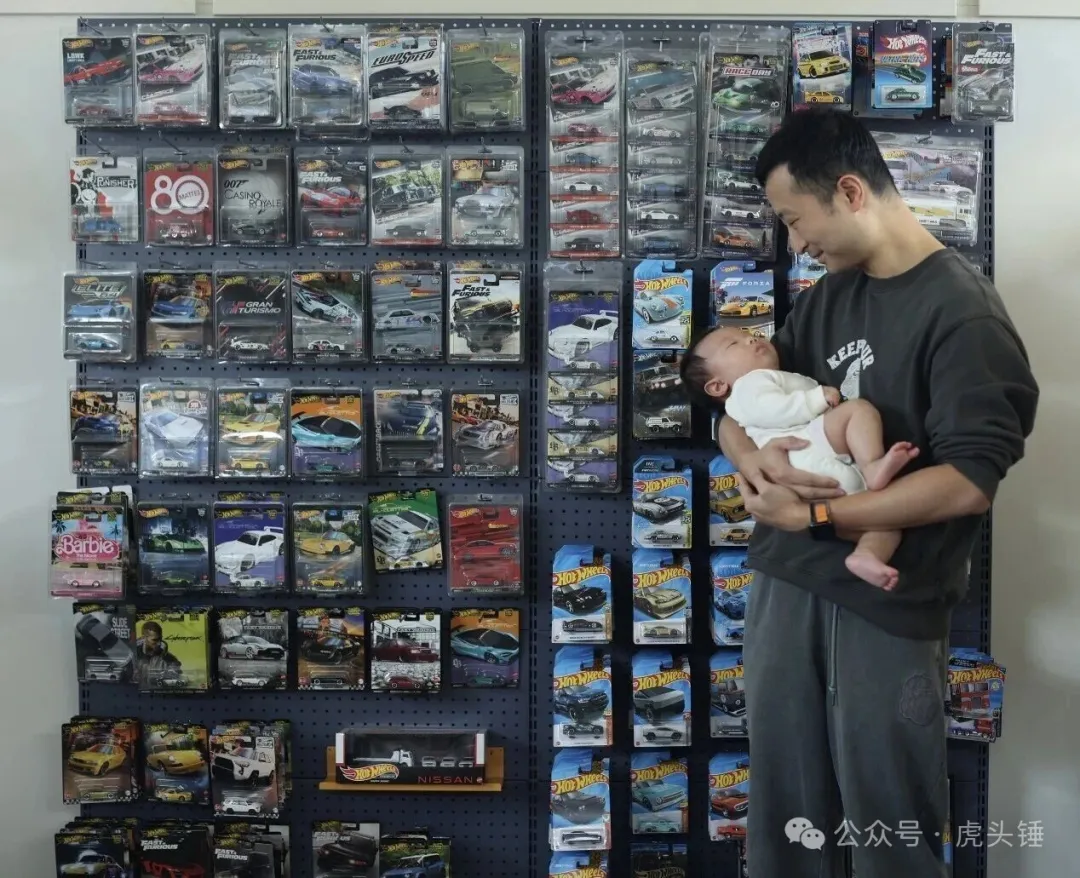
"I'm someone who is very good at entertaining myself," he says. Like a small glass of wine after dinner—not strong, but bringing a lasting, quiet joy.
Nourishing Others Silently
The deeper side of his earnestness is his willingness to share his experience with others.
In May 2025, he stood in a classroom at Monash University, with "Cyber Security in Real World" as the title on his slides. A group of students sat before him. He opened with a question: "Do you know what cybersecurity actually does inside a company?" The answers were all over the place.
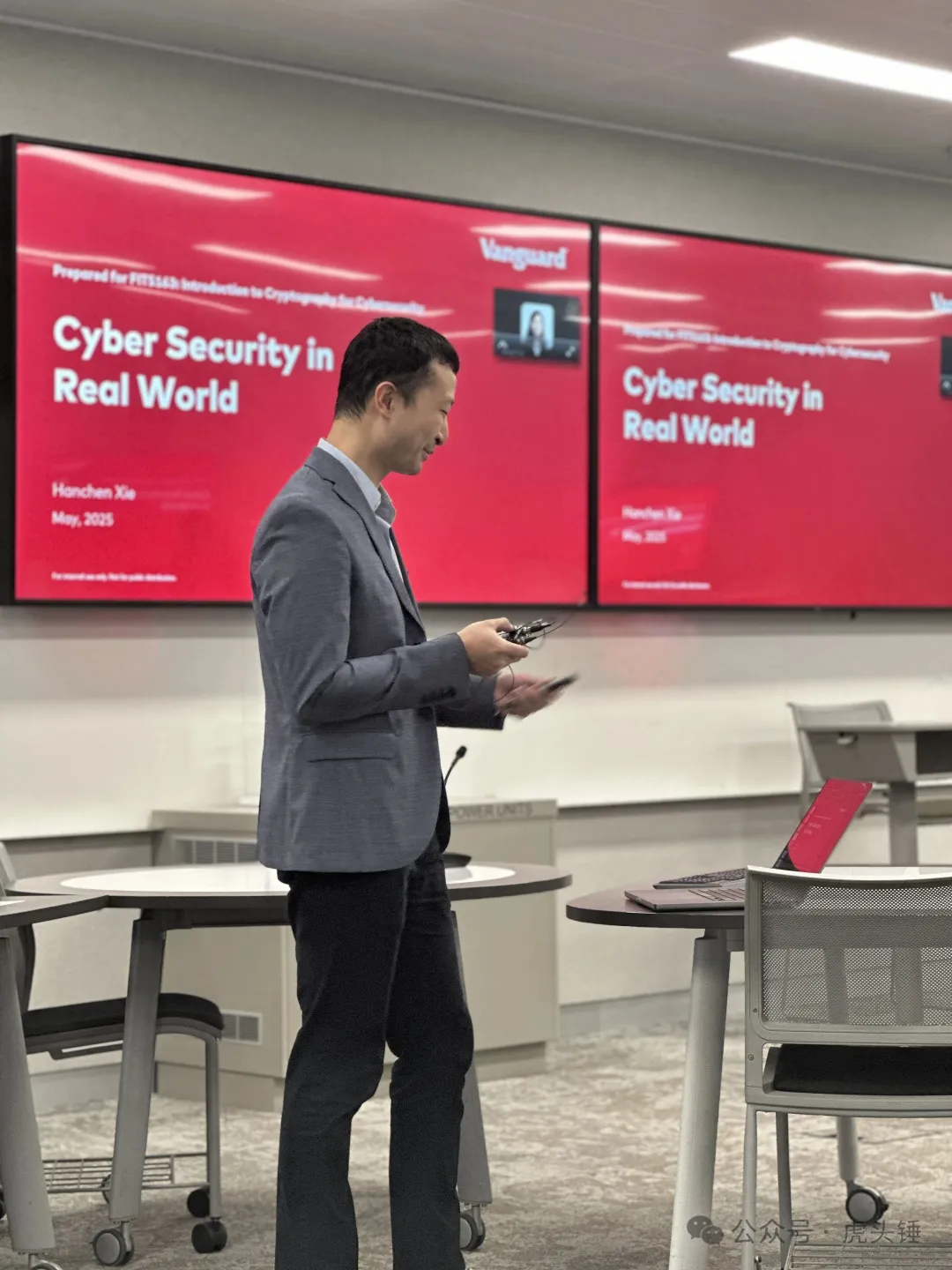
He spoke at length, sharing his own experiences. Dry terms like SOC, IAM, and DevSecOps were broken down into concrete scenarios and roles, making them accessible and thought-provoking for the students.
At that moment, he was not preaching big principles. He was straightening out the road he had walked, segment by segment, and handing it to them. He knows there is a wide gap between school and the workplace, and what young people need most is a relatable person who has been there before.
In everyday life, he often helps juniors revise their résumés and do mock interviews, chatting and editing at the same time. There is no fancy technique—just breaking his own insights into small pieces and placing them in their hands.
He has said he wants to become a VP or CISO in the future. "I want to see where the ceiling really is, and how much influence I can have."
From the eye injury in his youth to the back pain during the pandemic; from studying abroad and drifting across countries to his steady steps and promotions in the workplace; from collecting Hot Wheels to standing at the lectern before young students.
His story is not one of a smooth road. But he has always known who he is. The peace that others spend years wandering to find, he possessed long ago. Not because of luck, but because of self-knowledge.
On the drifting road, he does not chase miracles, nor does he hide from storms.
Why not sing and stroll at ease?
Self-knowledge brings clarity.