CHAPTER 11
Anchors
Read It
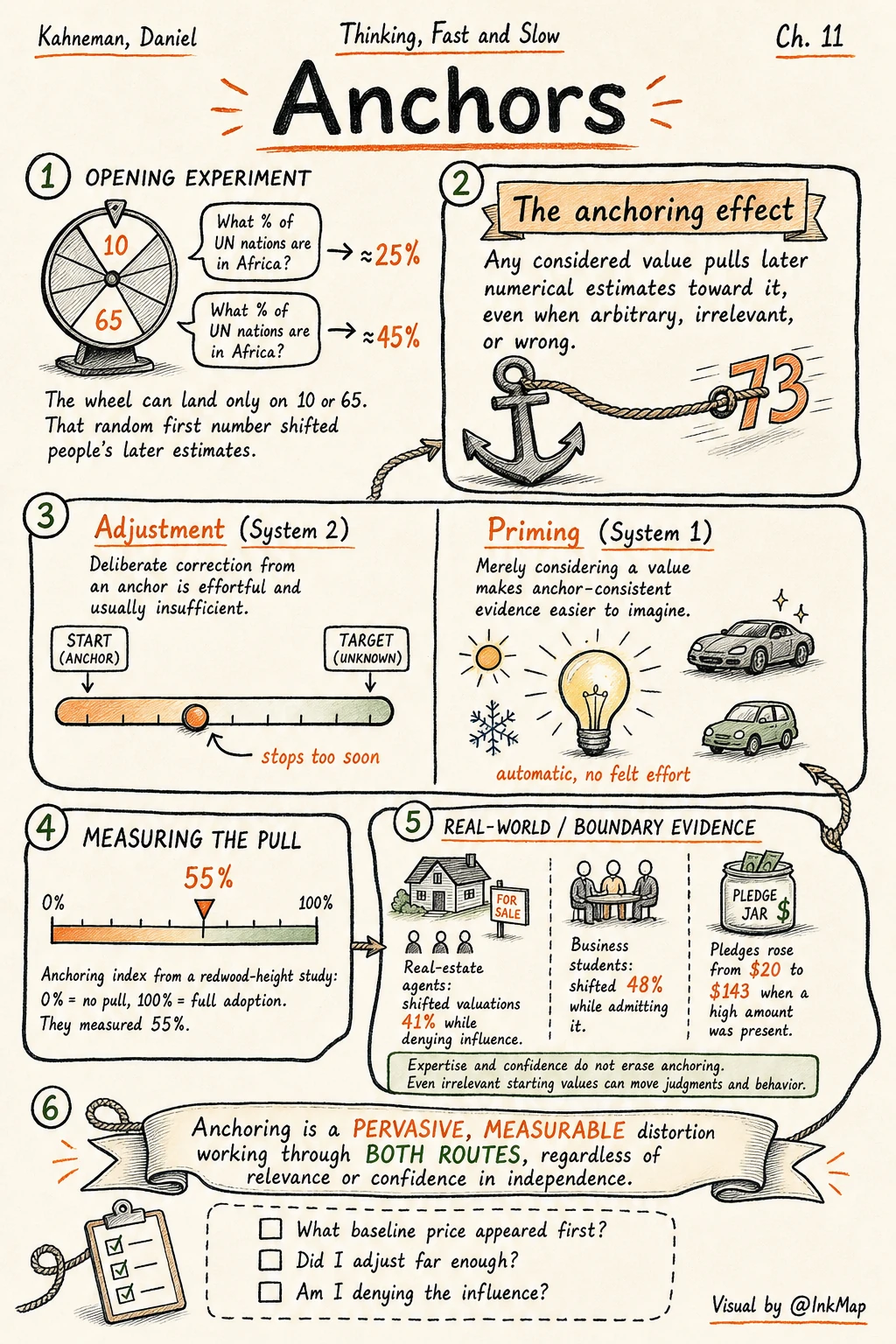
The uncomfortable part of anchoring isn’t that irrelevant numbers influence us. It’s that they influence us while we insist we’re independent. A wheel of fortune landing on 10 or 65 shouldn’t affect estimates of African countries in the UN, but it does. Real-estate agents, who work with numbers daily, get pulled by listing prices and still claim their valuations ignored the anchor.
The surface phenomenon is “the estimate was off.” The real problem is that a reference point that shouldn’t be in the judgment process got smuggled in. An anchor isn’t an answer; it’s a starting point. But people don’t walk far from the starting point before stopping. System 2 thinks it’s adjusting; it’s actually making an insufficient correction from the anchor.
 Open full image ↗
Draw It
Two layers need separating: where the anchor comes from, and how it affects judgment. The source can be random, absurd, or irrelevant. The influence runs through both System 1’s associative priming and System 2’s inadequate adjustment. A diagram shows one anchor working through two systems simultaneously, instead of leaving “anchoring” as a vague blob.
Rethink It
When estimating project timelines, if someone casually says “about three months,” the whole discussion orbits that number. Someone says two months, someone says four, but almost nobody rebuilds the estimate from zero. Three months becomes an invisible reference frame, even if it was pulled from the air. To break the anchor, make it visible and ask: where did this number come from?
Take It With You
Anchoring can’t be eliminated, only managed. The most effective move isn’t “don’t be influenced.” It’s to swap in a different anchor deliberately, or to write down the anchor’s source so every subsequent judgment gets tested against the same reference frame.