CHAPTER 06
Managing Technical Quality
Read It
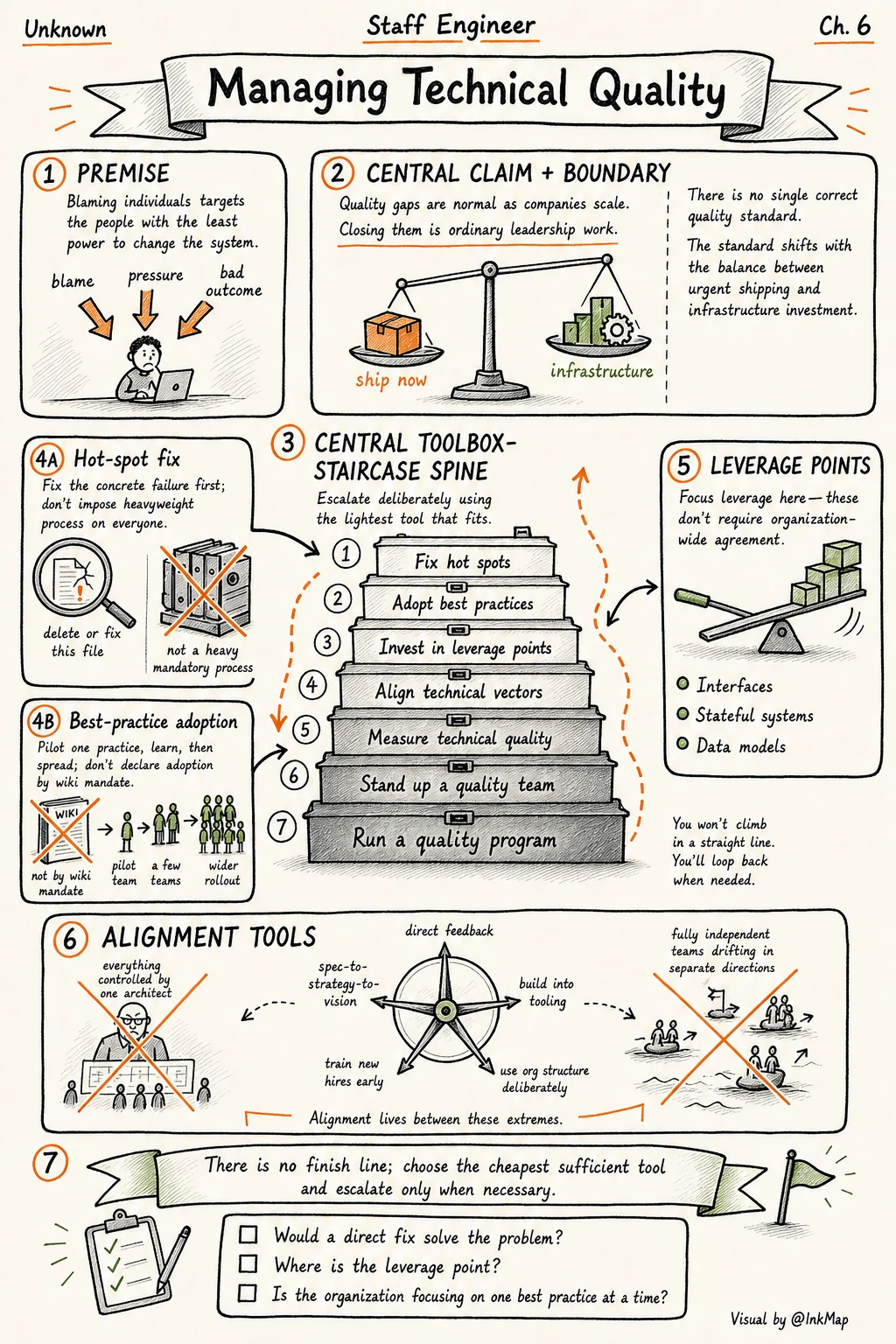
When technical quality slips, the instinct is to find someone to blame. But a quality gap is usually not a personal failure—it's a sign that the organization has grown and yesterday's standards no longer match today's reality. That reframing matters because it changes the response. If the problem is systemic, punishing individuals with the least power to fix it only deepens the gap. The real discipline is diagnostic: figure out where the gap comes from, then choose the cheapest effective tool. That means starting with hot-spot fixes and best practices, moving to leverage-point investments only when lighter tools stop working, and reserving heavy process for the rare cases that genuinely need it. Managing quality is not about how strongly you care. It's about how accurately you match the size of the response to the size of the problem.
 Open full image ↗
Draw It
The most valuable thing to visualize is the escalation ladder: hot-spot fixes first, then one best practice, then investment in interfaces, state, and data models—the leverage points that don't require broad consensus. Only when local measures fail do you need alignment efforts, measurement, or a dedicated team. Drawing this as a sequence turns "take quality seriously" from a slogan into a set of ordered choices. It also shows why investing in leverage points is often more effective than org-wide mandates: you can improve a fragile interface without first winning agreement from every team that touches it.
Rethink It
After an incident, the immediate reaction is often to add approvals, templates, and checklists. The better question is: did the failure come from one fragile interface, a class of repeated mistakes, or a technical direction that has already split across the organization? Each of those lives at a different level, and each needs a different tool. Using a company-wide process to fix a local hot spot makes everyone pay for a problem that only a few people have. The chapter's insistence on evidence-based, piloted, one-at-a-time process changes also rings true—introducing five new practices at once makes it impossible to know which one helped.
Take It With You
Mature quality governance is not about pushing every standard to its maximum at once. It's about using the lightest tool that addresses the main risk. The goal isn't a final quality bar; it's the ongoing discipline of choosing the cheapest effective intervention for the current gap.