STORY 02
Breaking Through, Finding Peace
 虎头锤 (Hutouchui) · Staff Engineer
Translated from the original Chinese essay · Read the Chinese original →
This is the second article in Wandering Under Different Stars (2/100).
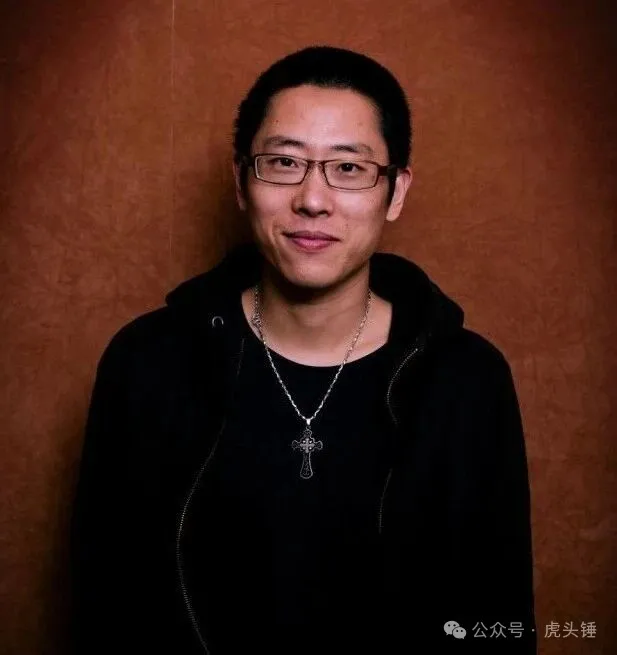
I've known Tiger for about seven or eight years. The coffee group and offline meetup group I organized in Melbourne started with coffee chats between him and me.
I really enjoy talking with Tiger. He is sincere to the point of being almost defenseless, and sincerity is a killer move in any relationship. What's even rarer is that he never hesitates to praise others. Some say that being remembered and affirmed by a sincere person is itself a kind of luck. I am that lucky person.
Today, let's talk about his story and see how he went from someone who didn't seem particularly "outstanding" to where he is today, step by step.
Tiger likes to record his daily life with videos. A while ago, a video he recorded about the Citibank layoffs actually reached a million views. At the end of this article, I will recommend that video to everyone. Remember to like, comment, and subscribe 😄.
Tiger often says that the truly difficult thing is not encountering problems, but discovering that no one can share the burden with you.
The most vivid confirmation of this statement was during his time switching teams at AUPost. The delivery lead and engineering lead in the team were in long-term opposition, their opinions like two parallel lines, neither willing to budge an inch. He was caught in the middle; things that could be clarified in a few sentences often dragged on for a week.
During the day, there was endless bickering in the office. At night, he had to rush home to work on his MBA thesis at the University of Melbourne. His status as a contractor made him even more uneasy, not knowing whether he could stay on the next month. He told me that during that period, he felt like he was running three marathons every day.
But if you turn back the clock, you'll find that this wasn't the first time he had reached the end of the road. Each time, he didn't leave the stage; instead, he found ways to extend the road a little further.
The Original Shape of a Dream
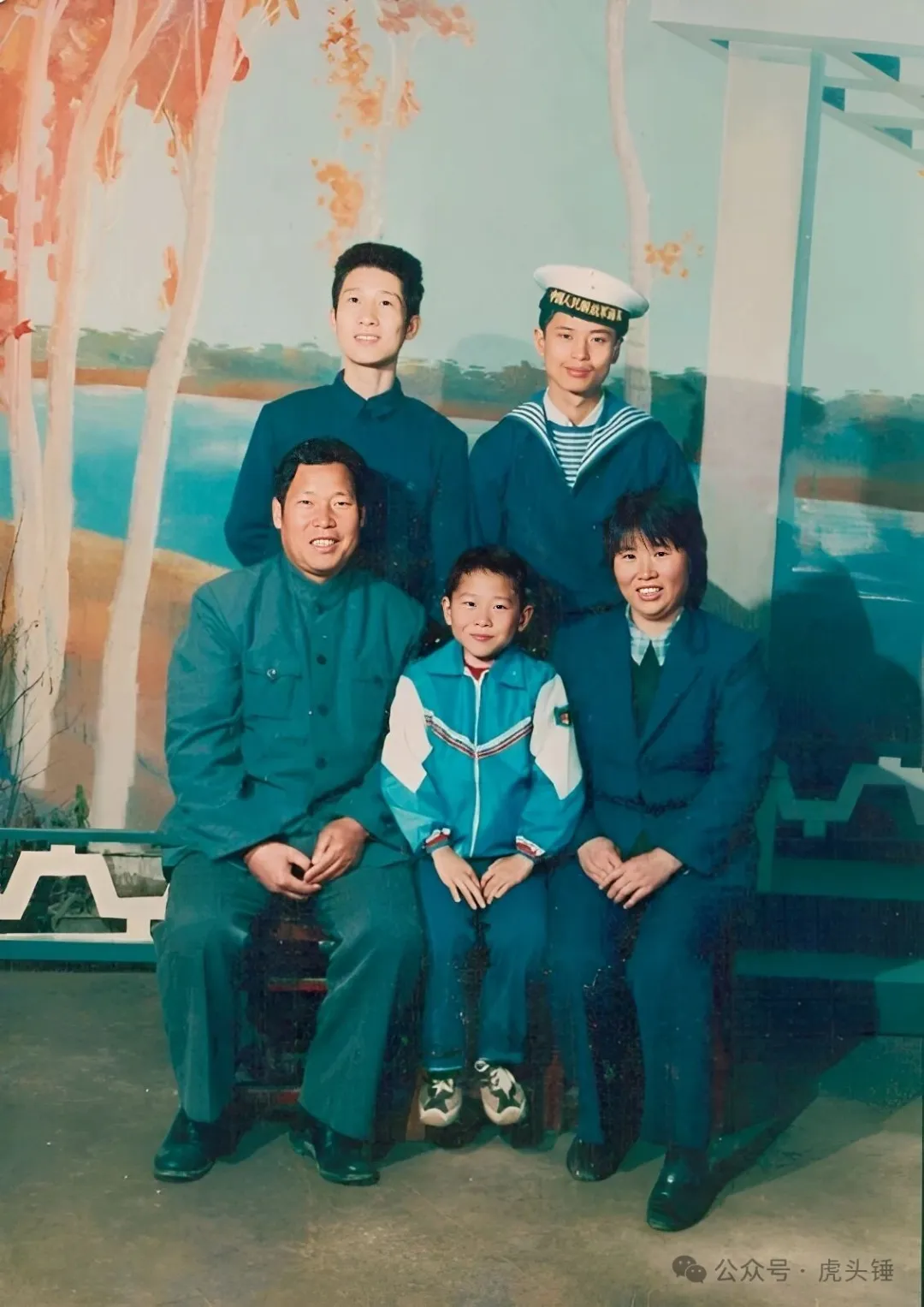
Tiger's first hurdle came at sixteen. That year, his father passed away suddenly. His mother held the family together, and he gritted his teeth and persevered. He first attended a junior college, then pushed himself into the exam for upgrading from junior college to university. That upgrade was a special opportunity at the time, allowing him to make his first degree a bachelor's.
When he got into junior college, his mother wept with joy and told everyone, "The Qian family's ancestral grave is smoking." In her eyes, it was almost equivalent to getting into Tsinghua or Peking University. Later, when he got into university, his mother was even happier, saying, "The ancestral grave is smoking again," as if he had gone to Oxford or Harvard. Tiger can't help but laugh when he tells this story.
By then, he had already understood a truth: the end of the road is not really the end; as long as you are willing, you can take one more step.
A few years after graduation, he successfully entered Citibank. The halo of a foreign bank was dazzling, but the reality was endless pressure and endless overtime. With insufficient English and a high-pressure environment, he felt like he was being swept forward every day.
It was at Citibank that he first felt "immigration" shift from a vague word to something people around him were actually doing. Coming from a small city, he didn't understand these things when he was young; immigration seemed like a distant dream.
Staying in Shanghai to work, immigration turned from a dream into a goal. Until one day, a colleague resigned and said he was going to the UK. The dream suddenly had a distance, as if within reach. He began to truly work toward it, treating immigration as a goal he could pursue.
But he soon discovered that having a goal wasn't enough. Under the intensity of Citibank, there was simply no time to properly prepare for the IELTS. Later, he went to SAP Labs Shanghai. It was a great company with better pay and benefits, a more stable atmosphere, and he still keeps in touch with many colleagues. Even so, his immigration dream didn't stop. SAP was also a foreign company, and English was always an unavoidable threshold.
So he got up at six every morning to study, and doing IELTS practice tests became his daily routine. He did all the real IELTS questions at least three times and took the test five times before finally getting the score he wanted.
But immigration policies are always unpredictable, and the age-30 cutoff once blocked him out. He was disappointed, but he didn't give up. A few months later, he finally got the South Australia state sponsorship.
A vague dream was thus pushed into reality.
Seeing the Road in the Dust
In 2012, he came to Adelaide alone, leaving his wife and eight-month-old child in China.
His first job was sales. He knocked on doors one by one, and before he could finish speaking, the door had already closed. He also tried washing dishes in restaurants and working in kitchens. The first three days were unpaid trial shifts. When he got home at night, the smell of cleaning agents lingered on his nose.
At that time, his luck was relatively good. In the fourth week, he got a job as a programmer at a small company with an annual salary of 45,000. After working for nine months, he jumped to a French-backed company for double the salary. In his own words, "I brought it on myself." Because just four months later, the company laid people off.
This time, his luck wasn't as good. IT jobs seemed to have disappeared, pushing him back to the starting point of manual labor.
At first, when he heard he could pick grapes on a farm, he imagined a beautiful vineyard under blue skies and white clouds, workers leisurely picking grapes, and maybe newlyweds taking wedding photos in the distance. The reality was getting up at four in the morning and carpooling for three hours to get there.
On the first day, he didn't bring gloves—after all, why would you need gloves to pick grapes? He didn't expect that the rapid, mechanical repetitive movements would, by the end of the day, leave his left hand covered in blisters and cuts from the vines, and his right hand so swollen he couldn't hold the scissors. When he washed his hands, grape juice and water mixed with blood flowed down, and the piercing pain suddenly hit him.
Then came the mushroom factory. Ten hours of heavy physical labor, and he lost ten kilograms in a month.
But even with blood, sweat, and exhaustion, he still had to go to work the next day.
What truly woke him up was a sentence from his Indian friend Sachin in the break room of the mushroom factory: "We have to get back to IT. That's where we belong."
A blow to the head.
From then on, he set a rule for himself: no matter how tired he was, he had to squeeze out one hour a day to study and get back to his real track.
In 2014, he met the permanent residency requirements, got his PR, said goodbye to Adelaide, and came to Melbourne.
He thought real stability was about to come. But reality is always half a beat slower than expectations.
In four months, he sent out more than two hundred resumes and got only two interviews. During the day, he worked at a fish and chips shop, cutting fish and frying chips; at night, he returned to a rented small room and slept in bunk beds with a friend.
One time, as they lay in bed staring at the ceiling, he asked, what if we can't find a job? His friend said, worst case, we go back to China and treat it as a two-year travel experience. He nodded and said, maybe. But the next day, he sent out his resume again.
Finally, a phone call came. His first IT job with an annual salary over 100,000 AUD arrived. Given his seniority (Senior Level), this salary wasn't particularly high, but it was a solid stepping stone that allowed him to keep moving up. Later, he joined NAB, and life gradually became stable.
He later said that the phrase "stay at the table" was something he realized during this period. So all his subsequent choices were made to stay at the table.
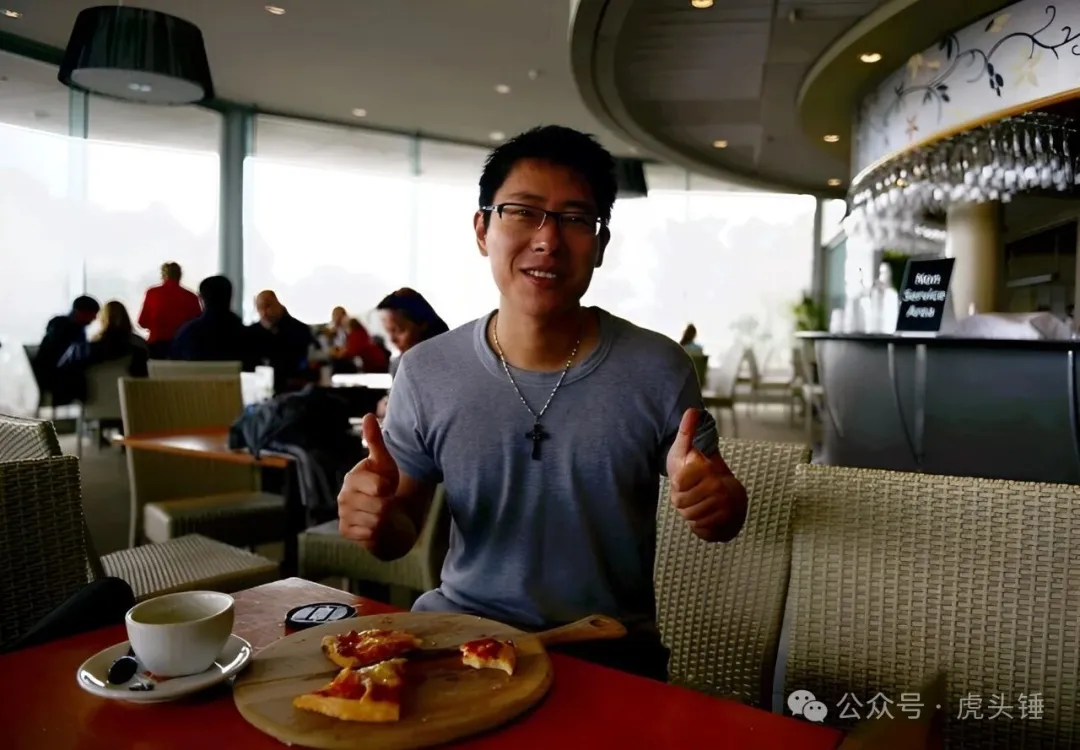
The Eagle Soars
After three years at NAB, he chose a riskier path and became a contractor. The income was higher and there were more opportunities, but it also meant he could be knocked over by the waves at any time.
Contractors often face an invisible, endless mental tug-of-war. In a team, there are always opposing logics: one side wants speed, the other wants certainty. On the surface, they are arguing about solutions, but in reality, they are fighting for influence. So he had to explain, coordinate, and repeat every day, and at night, MBA cases were like another language he had to translate: business models, cash flow, organizational behavior, competitive strategy. This was a set of tools engineers rarely use.
I was quite surprised when he chose to pursue an MBA. He explained to me that it wasn't for the degree, but to push himself from someone who can do things right to someone who knows why to do them and what to do first, and also to advance further in the Australian workplace.
During that period when he was almost crushed, what he learned was not how to win, but how to break down uncertainty. Every day, he pushed forward one detail, even if it was just reading one paper, writing one page of his thesis, or clarifying one small thing with one person.
He always tells me that fortunately, with ChatGPT now, whenever he doesn't understand something in his MBA classes, he throws it at the AI and asks until it's explained clearly. Group discussions are still tough—after all, an MBA is a whole new language and field—but he has managed to hold on.
I asked him, what does drifting mean to him?
He said that at sixteen, he left his hometown to study in the county town. Since then, everywhere he went, he treated it as home. In Shanghai, he bought a house and started a family—that was home. Now in Melbourne, with his wife and children by his side, this is home.
So to outsiders, this looks like drifting; but he doesn't see it that way. Drifting is being pushed by the wind, while he made a choice at every juncture, paid the price, and then settled his heart.
But there is one thing he always keeps in his heart.
When his mother was alive, she once asked him: Why do you want to immigrate? But at that time, he was busy with studies and work, and never really sat down to talk with her. Later, when Melbourne was locked down for a long time due to the pandemic, he couldn't go back to see his mother one last time. That question just hung in the air, never to be answered.
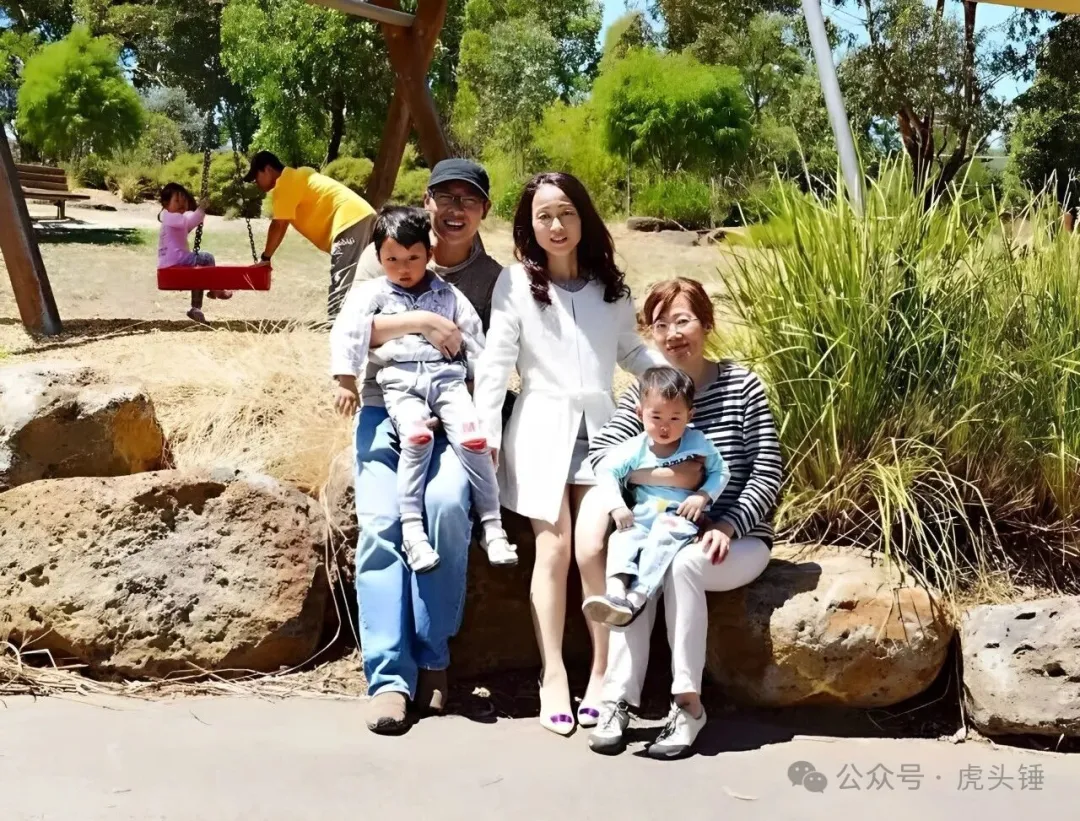
Now, he works hard more for his children. Although he often jokes that he is not a smart person, he hopes his children can see that an ordinary father is also striving to chase his dreams. Like Forrest Gump, clumsy but persistent.
Epilogue
"A peaceful heart" is not consolation, but an active choice.
For others, home is a coordinate on a map, a house number and a postal code; for Tiger, home is a posture, a heart that can still settle after every rupture.
At sixteen, home was the desk in the county town; in Shanghai, home was the apartment where he could buy books and pay the mortgage; in Melbourne, home is the sight of his children running in the yard. Every migration is a re-settling after a breakthrough.
He breaks suffering into days, turns migration into routine, and brews uncertainty into solid ground beneath his feet.
Having known Tiger for so many years, what moves me most is not the thresholds he has crossed one after another, but that he always carries a youthful mindset. When it's bitter, he can laugh; when it's hard, he remembers gratitude; when he has gone far, he never forgets where he came from.
Breaking through yourself, you finally find peace.