Work & Career
Staying Low-Key Won't Save You: The Invisible Battle Royale of Australian IT Workplaces
 虎头锤 (Hutouchui) · Staff Engineer
Translated from the original Chinese essay · Read the Chinese original →
“I don’t like the rat race. I just want to write code in peace.”
“I want to do meaningful work, not put on a workplace performance.”
You’ve probably heard lines like these in Slack, in the break room, or during performance reviews. The person saying them usually has a calm, even confident look. But check the org chart six months later, and their avatar has gone grey.
In Australian IT companies, even if you’re in an environment that seems gentle and champions work-life balance, you still have to face a reality: stack ranking performance distribution is quietly filtering the team through silent elimination.
This isn’t the aggressive management style that shouts about KPIs and paints you a picture of the striver’s pie. It’s a year-end switcheroo so quiet you can’t hear a thing. You didn’t make a mistake, and you didn’t underperform. You just suddenly receive a meeting invite one day: “There’s an organisational restructure, and our positions need to change.”
You think you’re writing code, but you’re actually in a systematic survival game with no sound cues.
The Brutal Truth of Stack Ranking
Stack ranking means the organisation must periodically sort employees into tiers: 20% high performers, 70% normal, 10% to be optimised. The catch is that “to be optimised” doesn’t mean poor performers—it means the people nobody speaks up for.
If your presence isn’t strong enough, your footprint isn’t deep enough, and your influence isn’t broad enough, you might be put in the “low organisational resistance” bucket even if you complete your tasks. Not because you’re incapable, but because “moving you won’t cost much.”
It won’t reject you to your face, and it won’t publicly give you a low score. Instead, it slowly makes you invisible:
- Your name doesn’t appear in project docs;
- You’re not asked to give tech talks;
- Cross-team collaboration starts bypassing you;
- By year-end, nobody remembers what you did.
You’re not just shipping code; you’re trying to write an existence log in the system.
It’s Not About Ability—It’s About Leaving No Trace
Many people naively think, “If I don’t make mistakes, I won’t be laid off.” But the rule of stack ranking isn’t eliminating mistakes—it’s cost-effective layoffs.
You didn’t make mistakes, but nobody knows what you did, so you’re the safest person to cut.
You didn’t lose on ability; you lost on not being remembered:
- The system you built has been stable for three years, but you never proactively led any major upgrade;
- You participated in multiple projects, but never owned a key module end-to-end;
- You did a lot of support work, but nothing that your boss could put in the year-end slide deck.
When the system evaluates everyone’s “organisational retention value,” what it fears most isn’t that you don’t work—it’s that “if you’re gone, the impact is minimal.”
At that point, even the gentlest organisation turns cold: Nice to have, but not must have.
Reverse-Engineering from the Golden Circle: What’s Your Reason to Stay?
If you just want to quietly work hard and stay low-key in the workplace, you must understand one reality: the system won’t score your character; it only weights your footprint.
Before looking for solutions, let’s look at the Golden Circle proposed by Simon Sinek in his TED talk “How Great Leaders Inspire Action.”
The Golden Circle is a leadership and communication model that thinks from the inside out, emphasising that the most influential people or organisations start with “Why,” then move to “How,” and finally to “What.”
- Why is your mission or belief, the fundamental reason you exist (e.g., why did I choose the path of technical leadership?).
- How is your method, process, or unique way of executing (e.g., how do I improve team collaboration quality through mechanism design?).
- What is the specific work you do and the results you achieve (e.g., the system architecture optimisations I led, process improvements, knowledge sharing, etc.).
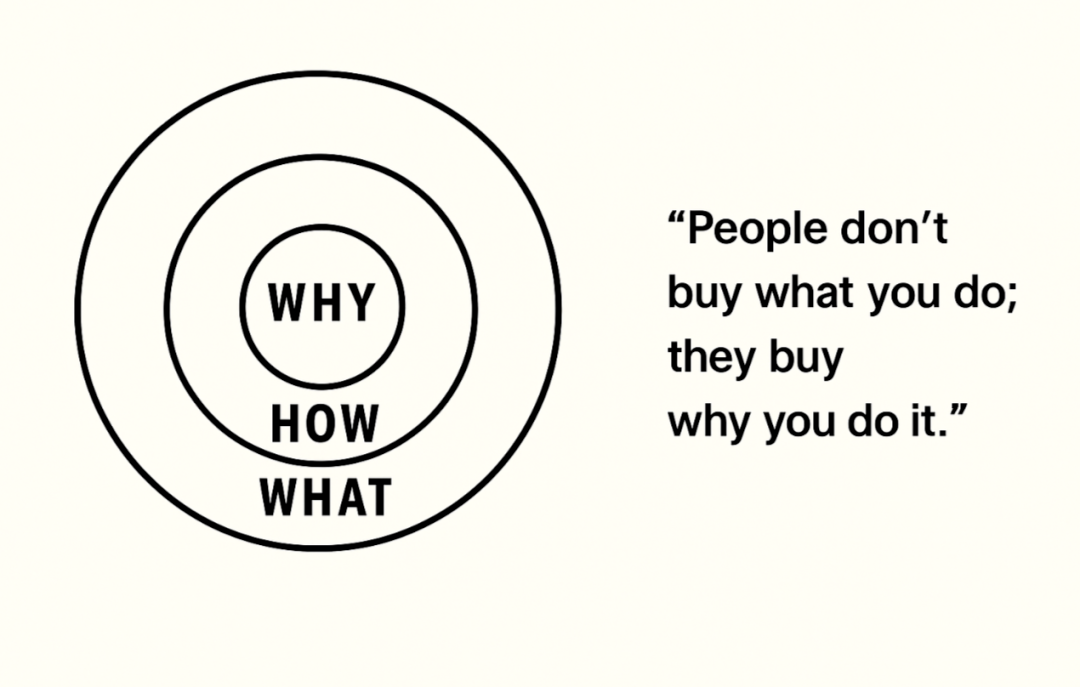
In personal growth or organisational change, starting with Why inspires trust and drives buy-in, rather than just talking about specific work content. That’s the true source of “making people follow.”
We can apply this model to survival strategy in the same way:
- Do we have a clear “workplace Why”?
If we just want to “complete tasks,” we’re easily replaceable. But if we’re clear about what value we’re building, our actions become more directional and easier to recognise.
For example:
- “I focus on improving developer experience and reducing the anxiety caused by deployment failures”;
- “I’m committed to bridging the interface boundaries between business and backend”;
- “I want to build a tech stack that the team can pass on and sustain.”
This isn’t sloganeering; it makes what we do traceable, logical, and meaningful in a recognisable way.
- Is our “How” unique enough?
Living long in an organisation isn’t about doing the most; it’s about doing things with a style that makes others know we’re the person who “can solve a certain type of problem.”
For example:
- I’m the person who writes the most systematic incident write-ups;
- I always clarify confusion in cross-team interface alignment meetings;
- I habitually do doc-first design and push for code standardisation.
These traits are the “behavioural fingerprints” we leave in the organisation—the beginning of others needing us rather than us begging them.
- Is our “evidence chain (What)” solid enough?
Many people do a lot but record little. Their year-end summary reads “I assisted with… I participated in…”—a classic way to be classified as a “supporting character.”
We need to build a traceable “organisational memory path”:
- What core changes did I lead?
- Which proposal did I draft?
- Which incident’s final RCA did I write?
- Which process improvement did I push to launch?
When these organisational logs become objective facts, our resistance value in the system goes up, and we’re no longer easy to move.
Increasing the “System Resistance” to Being Kept
Ultimately, our goal isn’t to be the best performer, but to become the hardest person to move.
Here are a few optional paths, chosen according to personality and role:
- Technical moat type: maintain difficult but critical systems, accumulating tacit knowledge that can’t be easily replaced;
- Collaboration leverage type: become a key interface for new hire growth paths, cross-team bridges, data pipelines, etc.;
- Reportable type: lead projects or process improvements that can be written into organisational reports, providing “boss-bragging material.”
These things may not be the most important, but at year-end scoring they are the easiest for the organisation to remember and align with value.
Always Keep an “Escape Route” Ready
Even if you do all of the above, it doesn’t mean you’re forever safe. Smart professionals aren’t the most stable; they’re the ones who can adjust course the fastest.
Here are the escape anchors we need to maintain:
- Maintain a project story library regularly: don’t wait until you’re job hunting to prepare; build a habit of quarterly self-summaries;
- Build transferable influence: write blogs, give talks, contribute to open source—not for fame, but to leave paths outside;
- Maintain a strong relationship network: keep 3–5 former colleagues, bosses, or upstream/downstream partners willing to vouch for you;
- Take high-quality interviews regularly: once a year, not to switch jobs, but to test the market and practise expressing yourself;
- List criteria for your next stop: avoid toxic culture, confirm business fit and cultural fit.
True freedom isn’t the company guaranteeing we won’t be moved; it’s letting the company know that we can leave at any time, but the value we leave behind is worth their effort to keep us.
Conclusion: We Don’t Have to Perform, But We Must Leave a Trace
We can choose not to fight for the spotlight, but we can’t be without a backup plan. We can enjoy a stable pace, but we can’t lack systemic presence. We can choose to stay low-key, but make sure that in the organisation’s eyes, we’re someone who “can’t be easily moved.”
In this system that looks tolerant but actually cuts by ratio, our fate is never decided by “whether we made mistakes,” but by whether the system has a reason to keep us.
Don’t wait until that “headcount review” meeting invite arrives to start finding evidence of your value. Leave a trace, leave some system resistance.
Because this workplace isn’t one we leave only when we want to, nor one we can stay in just because we want to.