Work & Career
6 Practical Lessons from 14 Silicon Valley Engineers—Number 5 Hits 90% of Tech Workers Hard
 虎头锤 (Hutouchui) · Staff Engineer
Translated from the original Chinese essay · Read the Chinese original →
It's already May 2025. Is anyone else's annual plan getting slapped in the face like mine?

Trust me, this article is for you.
Recently I came across a YouTube video where 14 tech professionals from Google, Meta, Microsoft, and well-known tech bloggers shared the key lessons that helped them grow the fastest in 2024.
This isn't formulaic personal branding or abstract "stay passionate" advice. Each person uses a real moment to show us: what does it actually take to keep advancing in the tech industry?
As someone who loves learning, I watched this video repeatedly (three times), worked through the subtitles (my English isn't great), and distilled six workplace survival rules that every tech worker must master. I hope you'll join me so we can at least complete one plan that doesn't get slapped in the face by this year's flags.
Rule 1: Proactively Show Your Value Instead of Waiting to Be Discovered
"Silent engineers are often the slowest to get promoted." —Namanh Kapur
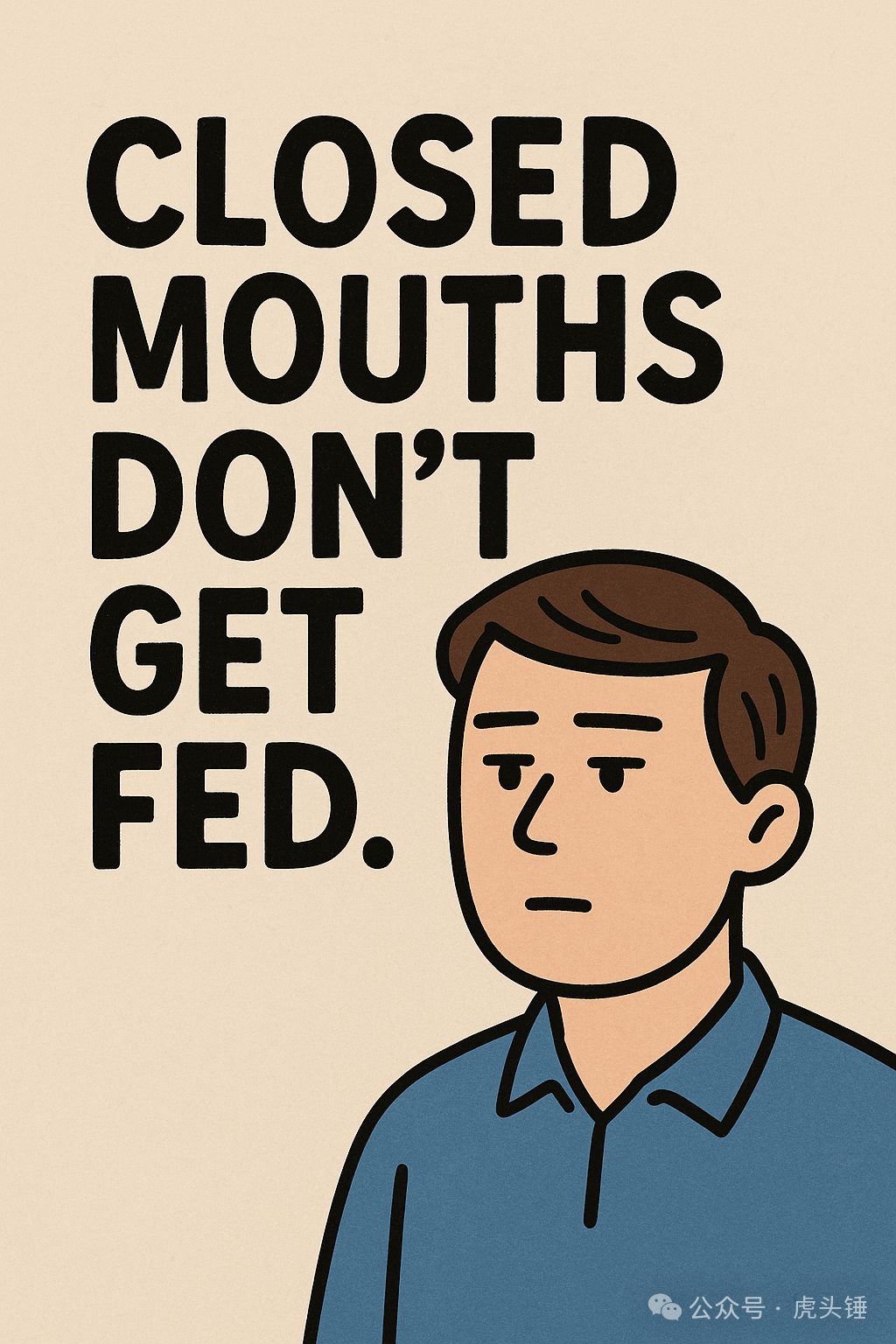
"Closed mouths don't get fed."
No matter how good you are at writing code, if you don't speak up, no one will know what you've done. Namanh Kapur shared that writing work notes on LinkedIn and proactively messaging peers is what opened up more collaboration opportunities for him.
Rahul Pandey emphasized: "Beyond technical skills, you need to be able to tell a good story. You're not solving a technical problem—you're solving a business challenge."
Peter Yang put it even more bluntly: "Don't wait for your boss to ask. Finish the work yourself and ship it."
Practical suggestions:
- Write a weekly "project review" and post it on LinkedIn, Zhihu, or your team group.
- When reporting, don't just list completed tasks—talk about "impact + approach."
- Share your "learning trajectory" externally once a month.
Rule 2: Plan Your Career Path Like a Product Manager
"Don't hand your growth over to the company." —Engineering with Utsav
"You own your career. Your manager is only a guide."
Utsav stressed that everyone should write their own "career roadmap":
- 1-year goal: upgrade your tech stack or expand horizontally into another function.
- 3-year goal: become a technical lead or move into team management.
- 5-year goal: own a product or a team.
Data with Zach also pointed out: "Your growth speed = your boss's trust in you." If you don't have clear goals, it's hard for others to support you.
Always remember that each of us is the CEO of our own career. If we don't proactively plan, the company will only use us at the lowest possible cost.

Practical suggestions:
- Create a Notion page and write down your "growth roadmap."
- Schedule a quarterly review with your boss to align.
- Break monthly goals into concrete "deliverables."
Rule 3: Solve Problems First, Then Seek Recognition
"Don't wait for tasks to be assigned. Fix problems yourself." —Jason Goodison
"Just build it. Don't wait to be told it's needed."
Jason shared a story from his internship: when he saw repetitive workflows in the team, he wrote a script to solve it directly. No one asked him to do it, but he solved the most painful problem and ended up with the highest internship rating in the company.
Pooja Dutt added: "Proactively solving problems that 'no one wants to touch' is often the opportunity for a career turnaround."
Alex Nguyen also pointed out: "Pay attention to the 'pain points' in cross-team collaboration. The person who solves them will be remembered."
Practical suggestions:
- Proactively identify the "repetitive actions" in your current projects.
- Start a side project to solve a small problem in your department's collaboration.
- Even optimizing a document structure can make you memorable.
Rule 4: Writing Is the Most Underrated Professional Skill
"Writing is the process of structuring your thinking." —Ryan Peterman (Meta)
"Write the plan. You'll think clearer, align faster, and grow faster."
Ryan's growth secret is writing a design doc for every project and using documentation to review outcomes. He grew from Junior to Staff at Meta in three years, and writing ability was a key part of that. After all, engineers who can't write docs will always be just executors.
Matt Huang reminded us: "Don't bring only problems to meetings—bring solutions." Even if you can't form a complete solution, at least try different approaches and propose possible directions. The benefits are endless.
Practical suggestions:
- All design docs must have a "structured explanation" (even for small internal tools).
- Review weekly: "What did I do this week + why did I do it this way?"
- Produce externally readable documents to expand your influence.
Rule 5: Regularly Challenge Your Comfort Zone to Avoid Career Burnout
"When was the last time work challenged you so much you couldn't sleep?" —Melky
"Comfort is a silent killer of potential."
Melky warned: a role that hasn't challenged you for too long is slowly draining your competitiveness.
If you haven't learned a new technology, done cross-team collaboration, or led a module refactor in six months, it's time to sound the alarm.
Peter Yang proposed: "Feed your own curiosity. Don't let your title limit you."

Practical suggestions:
- Apply for a "high-uncertainty" project every six months.
- Initiate team tech sharing sessions to explore unfamiliar areas.
- Lend a hand to other teams to broaden your perspective.
Rule 6: People Who Can Articulate the Value of Their Work Get Promoted Faster
"It's not what you did, but whether others understand what you did." —Rahul Pandey
"Own your story. Assign meaning. Tell it well."
Most tech workers just recite "what I did," but Rahul emphasized: "You need to explain why you did it, how you did it, and what impact it had." The biggest misconception among tech workers is thinking that doing good work is enough.
The storytelling method he recommends is the familiar STAR framework:
- Situation: project background
- Task: the goal you were responsible for
- Action: your core approach
- Result: actual outcomes + impact
Practical suggestions:
- Use the STAR framework to organize your three most recent projects.
- Write yourself a "technical value persuasion sentence" every week.
- Turn your plan into a document and submit it to your company's internal wiki or Zhihu.
Act Now: Pick the Easiest One for You to Start
Don't treat these suggestions as a checklist. Try starting with the rule that resonates most with you (you can also reach out to me, and I'll start with you):
- Write yourself a "growth roadmap."
- Choose a project and "document + structure" it.
- Find a cross-team problem and proactively solve it.
- Share a learning experience on your social platform to practice "being seen."
Real career breakthroughs begin with action in the present.
"Don't just be someone who knows things. Be someone who does things."

This article is based on the special video "The Best Tech Career Advice For 2025" from the YouTube channel A Life Engineered. Participants include:
Jeff Su, Namanh Kapur, Engineering with Utsav, Jason Goodison, Cloud With Raj, Rahul Pandey, Kevin Naughton Jr., Data With Zach, Matt Huang, Pooja Dutt, Melky, Alex Nguyen, Peter Yang, Ryan Peterman