Skills & Learning
Why Can't You Keep Learning? Because You're Too "Disciplined"
 虎头锤 (Hutouchui) · Staff Engineer
Translated from the original Chinese essay · Read the Chinese original →
Like everyone else, I often force myself to learn things. Every morning I fill my schedule with plans: one hour of podcasts, 30 pages of PDFs, and an evening review. The fuller the plan, the greater the internal friction.
But what frustrated me most wasn't "laziness"—it was that I actually followed through, yet found it harder and harder to keep learning. By the fifth day, I was staring blankly at the page, feeling empty inside, unsure of what I had actually learned.
Looking back now, my state at the time wasn't a lack of motivation; it was that I was relying too much on self-discipline.
Using willpower to force yourself to learn is the most energy-draining way to learn. On the surface it looks like "persistence," but in reality it easily becomes a form of self-punishment under high pressure.
Learning, like writing code or documentation, isn't something you can force out. It's more like rolling a snowball—you have to nudge it little by little until it starts moving.
Once it starts rolling, it can bring results, a sense of achievement, and the positive feedback loop that keeps us going.
Learning enthusiasm isn't a trait; it's a structure
Over the past 80 days, I've been doing one thing: writing a daily public account post for 100 days straight.
Initially it was just to summarize my input and improve my expression. Unexpectedly, it became the strongest engine for maintaining my learning enthusiasm.
I barely relied on self-motivation like "persistence is victory." Instead, I built a learning system that keeps me moving without relying on self-discipline.
It has three key structures:
01. Embed learning into your work, not as an extra task
In the past, when I wanted to learn something new, I always tried to find time for it. But after work my energy was drained, and the moment I touched study materials I felt drowsy.
Later I changed my approach: instead of squeezing out time for learning, I embedded learning into my work process.
For example, when I write daily posts, much of the content actually comes from problems I encounter at work and in interviews: How do you talk about project experience more persuasively? How do you optimize the observability of a microservices architecture? How do you demonstrate impact in behavioral interviews instead of just reciting STAR?
Writing articles isn't just output; it's also a process of organizing input. Learn → articulate → apply → leave a record. This process itself is a living learning loop.
Once you realize that learning flows naturally from your work, it no longer feels like an extra task.
02. Turn feedback into a source of motivation, not a judge
If learning never gets any response, it easily withers.
The reason I've been able to write for eighty days isn't because I'm great at persevering. It's because every time a reader comments, shares, or asks a question, I feel re-energized.
These comments aren't "You write so well!" They're things like "Isn't this exactly me?", "I'm also interviewing right now and stuck at this exact step," or "Could you write about how to talk about failure experiences?"

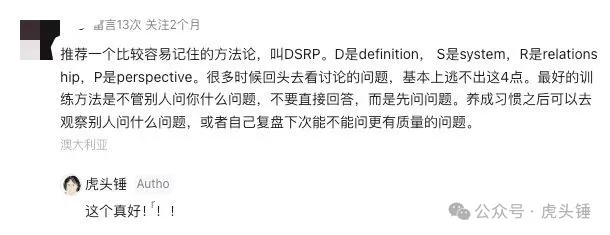





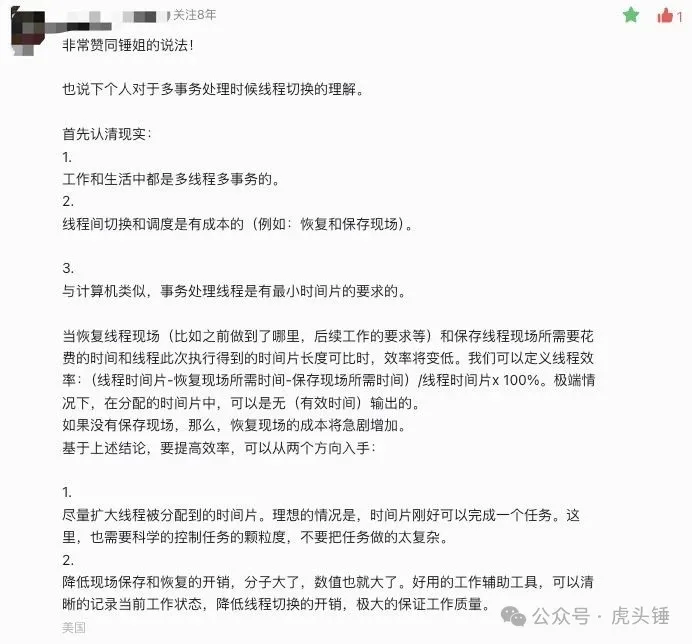

They're not praise; they're connection. They tell me that someone is using what I've learned, and someone is listening to what I say.
This is far more motivating than any daily check-in.
So if you're learning a new skill or wrestling with new knowledge, don't always work in isolation. Find a space where someone can hear you—even a single tweet or a small group share. Make your learning visible, and you'll have the momentum to keep going.
03. Build a learning flow network instead of going it alone
Another important discovery: sustained learning doesn't rely on willpower, but on network effects.
When I started producing content consistently, many people proactively came to me with questions, suggested topics, provided resource links, and even filled in gaps I had missed.
This isn't fan interaction; it's my most authentic learning flow system: topics from real questions let me learn with purpose; reader questions push me to keep researching and refining my expression; good content from others becomes input for my next post.
I've become a relay node, constantly cycling between input and output. This is a far more efficient way to learn than grinding alone.
We don't always need to be the person who knows the most. But we can be the person who is willing to ask, willing to write, willing to share, and willing to admit what we don't yet know.
That's more efficient, more motivating, and more sustainable than locking yourself in a room and reading ten books.
Final words: It's not that you're not trying hard enough; you need a learning engine
Many people think they can't keep learning because they lack self-discipline. But I truly believe:
What really enables us to keep learning isn't forcing ourselves to consume a certain amount of material every day. It's building a system that "moves on its own."
When we:
- Embed learning into our work, turning it into a foundational ability for solving problems;
- Turn output into a feedback system, making connection a source of sustained motivation;
- Place ourselves in a learning flow network, being both an input and a contributor;
you'll find that learning no longer requires overcoming resistance. It starts to push you forward on its own.
It's worth asking yourself: what are you learning lately, and what small mechanisms could help you get the snowball rolling?