CHAPTER 11
Inside-Out Again
Read It
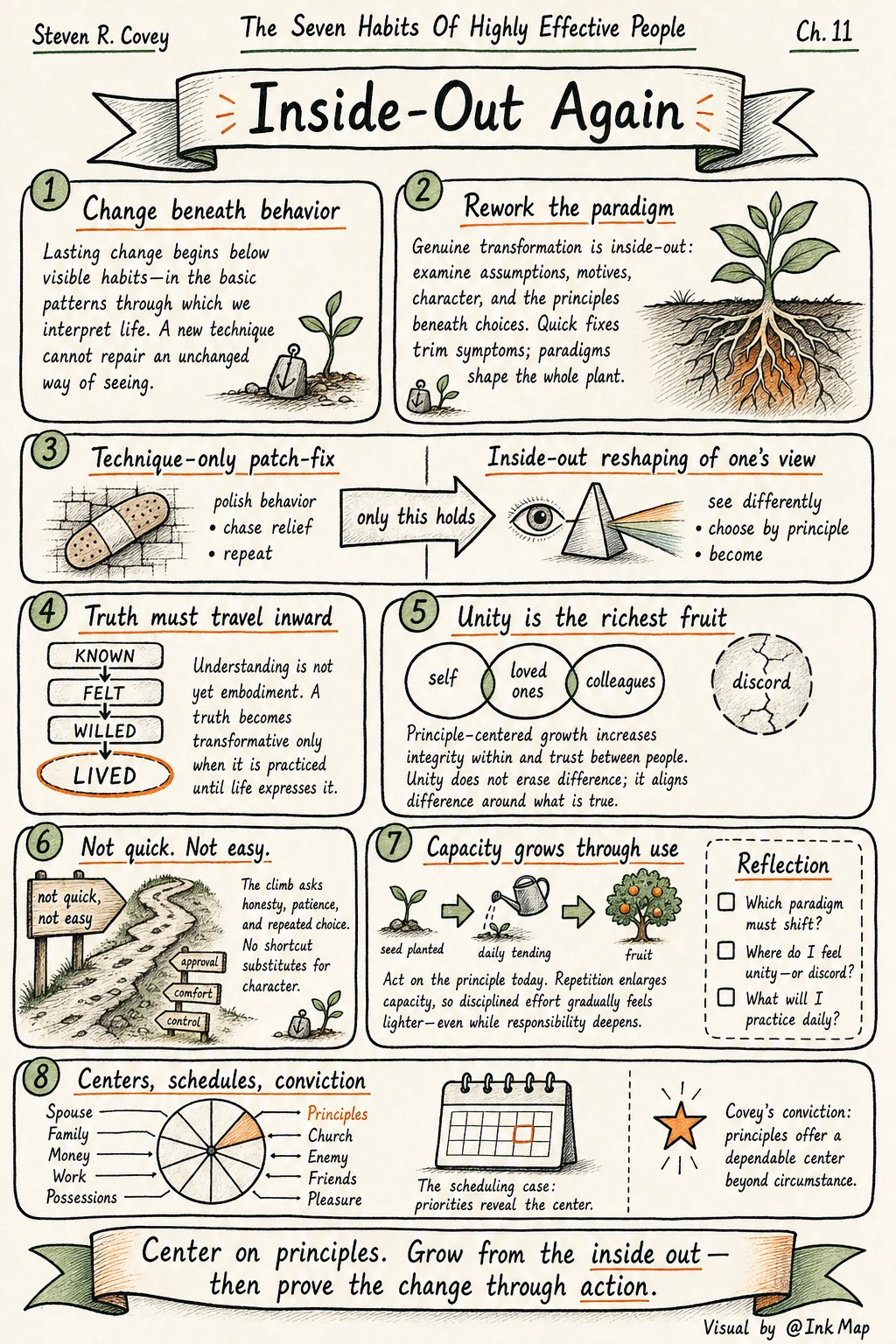
The book ends where it began, because inside-out isn't a project you complete after seven steps. New situations expose new paradigms. Relationships test whether the principles have actually become your default response. Knowing a principle is "I agree." Wanting it is "I intend to change." Neither is character. Character is what you do when no one is watching and there's no immediate reward—when you still tend toward the same choice. That's the slow, unglamorous work the whole book has been pointing at.
 Open full image ↗
Draw It
The seven habits aren't a linear finish line. They're a spiral that keeps returning to the inside. Personal choices shape relationships, relationships reveal new internal problems, and renewal makes the next round of change possible. Connecting the ending back to the beginning shows that "starting again" isn't repetition—it's practicing at a new depth. The appendix's contrast between principle-centering and other life centers makes the same point from a different angle: every alternative center distorts perception in its own predictable way.
Rethink It
Finishing a book or writing a retrospective creates the illusion of having changed. The real test comes the next time you're interrupted, criticized, facing conflict, or running on empty. Can you still pause, see the direction, understand the other person, and protect space for what matters? That's when you find out whether the principles have moved from your head into your reflexes.
Take It With You
Change isn't becoming someone who never slips. It's noticing the slip sooner and choosing again more quickly.