CHAPTER 12
Present to Executives
Read It
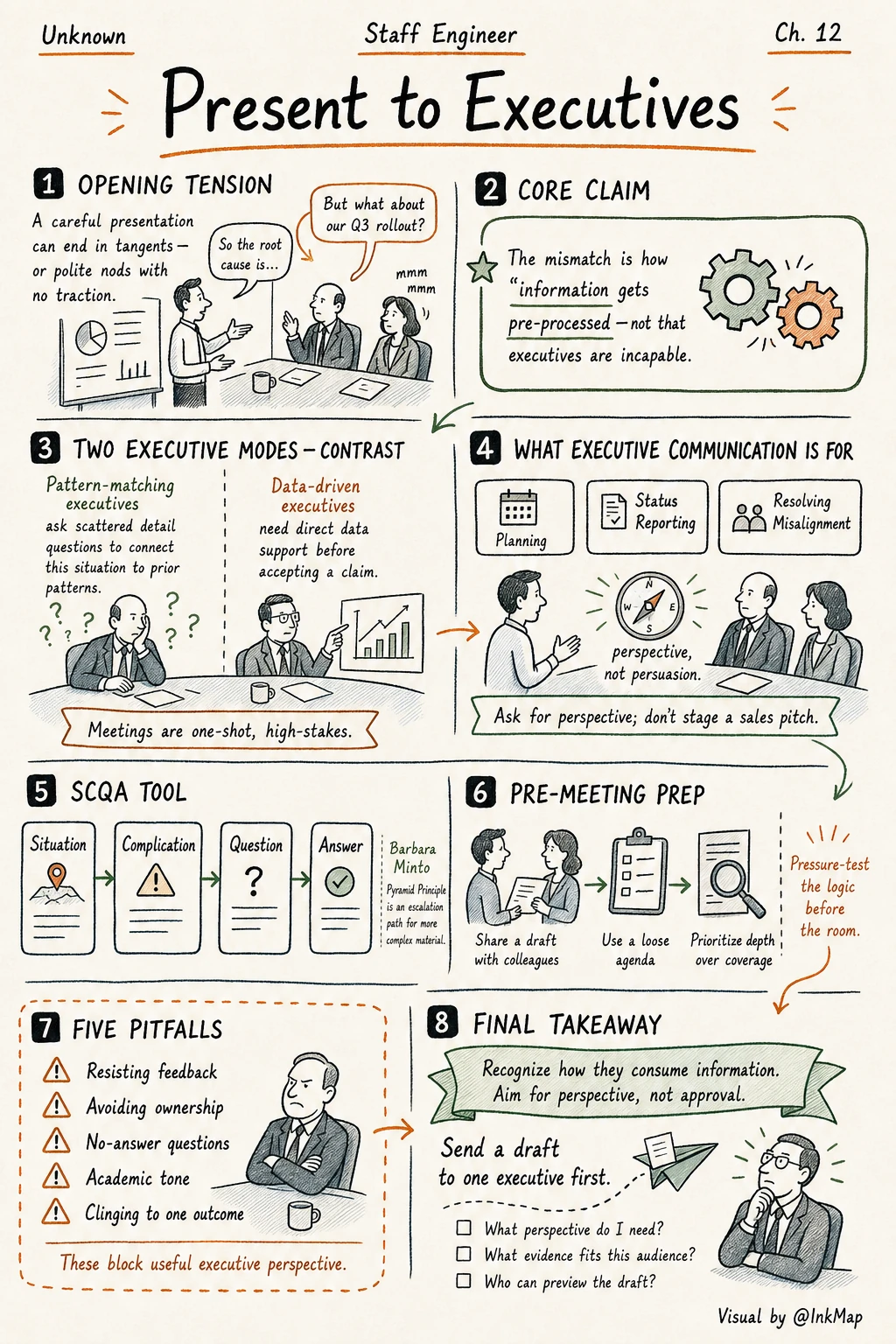
Executive communication fails not because the content isn't professional, but because both sides process information differently. Engineers tend to move from background and process to conclusion; executives want to know first why this matters now, what decision they need to make, and what it costs. When the audience changes, the information structure must change too. The first step isn't making slides—it's clarifying whether this conversation is for planning, status, or resolving misalignment.
 Open full image ↗
Draw It
SCQA's value isn't the four letters; it's forcing situation, complication, question, and answer into the right order. Connecting pre-meeting feedback, live discussion, and post-meeting action shows that presenting isn't just twenty minutes on stage—it's a full path from alignment to decision.
Rethink It
Many treat sending materials in advance as a courtesy, but it actually reduces surprises during the meeting. If a relevant executive points out a misalignment beforehand, you still have time to adjust. If every disagreement appears live for the first time, even complete content may lose the discussion window. Receiving criticism first and supplementing later protects trust better than proving yourself right on the spot.
Take It With You
Executive communication isn't about making content simpler; it's about putting decision-critical information earlier.